
Dock Leveler Explained with Diagram: Understand Its Core Structure and Basic Definition at a Glance
Introduction:
A picture is worth a thousand words. For a mission-critical piece of industrial equipment like a Dock Leveler, understanding its physical anatomy is the best way to grasp how it works and what it takes to maintain it. This article uses a detailed annotated diagram to guide you through an intuitive understanding of each core component, turning complex mechanics into clear, visual knowledge.
Body:
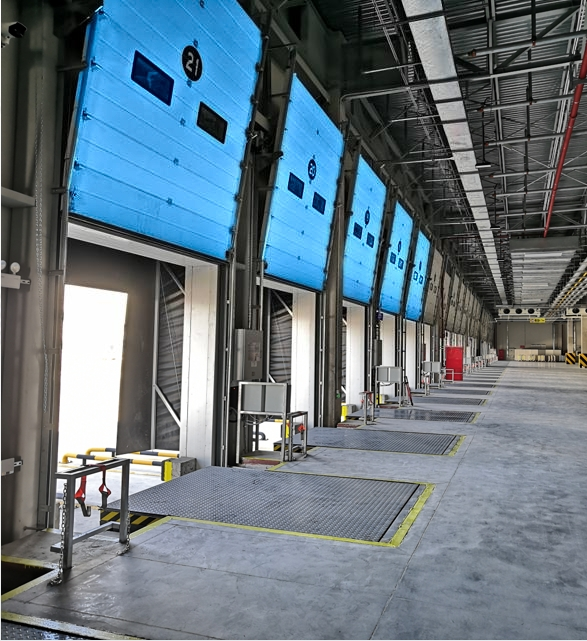
(Insert a high-definition cutaway illustration or 3D render of a hydraulic Dock Leveler's core structure here. This visual is the centerpiece of the article.)
Detailed Breakdown of Core Components (Based on the Diagram):
1. Lip Plate
Function: The flip-up or telescoping front edge that bridges the final gap onto the truck bed.
Key Point: A high-quality lip features anti-slip grooves and a high-strength structure to withstand repeated forklift impact and traffic.
2. Deck
Function: The main load-bearing surface where the forklift travels.
Key Point: Made from high-strength steel plate, its surface has raised anti-slip studs or welded treads to provide maximum traction in all conditions.
3. Hydraulic System – The "Power Heart"
Function: Provides smooth, powerful force to raise/lower the entire platform and maintain stability under load.
Key Point: Consists of the hydraulic cylinder, power unit, and control valves. A reliable, well-sealed system is key to the equipment's longevity and low failure rate.
4. Safety Chocks / Wheel Restraints
Function: Secures the truck's wheels during loading/unloading to prevent dangerous accidental departure.
Key Point: This is one of the most crucial active safety devices at the dock and should be a mandatory part of standard operating procedure.
5. Control Panel
Function: The operator's interface for controlling platform and lip movement.
Key Point: Options range from simple push-button stations to convenient wireless remotes, catering to different operational needs and site layouts.
Four-Step Workflow Explained:
Preparation: The truck backs into the dock, and its wheels are secured by safety chocks.
Bridging: Via the control panel, the hydraulic system activates, raising the platform; the lip extends to rest securely on the truck bed.
Operation: Forklifts travel safely and smoothly between the dock and the truck for efficient loading/unloading.
Reset: After completion, the lip retracts, and the platform automatically lowers to the level position, ready for the next cycle.
Conclusion:
Through this visual guide, you now have a concrete understanding of a dock leveler's construction. Every component is integral to its overall safety and performance. Every hydraulic loading ramp we build follows a philosophy of excellence in core components—from robust steel to reliable hydraulics—ensuring it becomes the most dependable link in your logistics chain. If you require a customized solution or would like more detailed technical drawings, please get in touch.
 Dock Leveler Explained with Diagram: Understand Its Core Structure and Basic Definition at a Glance
 Core Analysis of the Dock Leveler: How Did It Become Synonymous with Safety and Efficiency?
 From Definition to Value: Why Dock Levelers Are the Invisible Backbone of Modern Logistics